

August 21, 2026
DID CHASE SAPPHIRE RESERVE LOSE CUSTOMERS?
In June 2025, JPMorgan Chase announced that it was upgrading its Sapphire Reserve credit card. The annual fee for the most popular rewards credit card in the world was jumping from $550 to $795, a 45% increase. That announcement set off a firestorm of articles and online posts speculating whether the benefits of the card justified the new annual fee, and what the future of the card might hold. Looking at both the history of the card and the data from JPMorgan Chase financial reports, we will explore the rise of the first viral credit card, and see if there are any signs of recent negative impact due to changes in the program.
JPMorgan Chase was created in 2000 when J.P. Morgan & Company merged with Chase Manhattan Company, creating the largest bank in the United States. In 2004, JPMorgan Chase merged with Bank One, the largest issuer of Visa credit cards in the US, and by 2012, JPMorgan Chase became the number one credit card issuer in the country. And then they changed the game.
On August 23, 2016, Chase launched the Sapphire Reserve credit card as the premier rewards card, complete with 100,000 points, a $300 travel credit, and tons of bonus points for travel and dining purchases. The annual fee for the card was $450, but most industry experts valued the welcome bonus points and travel credit at almost $2000. The card was an immediate success. Within two weeks of the launch, Chase had exceeded its first-year sales goal.
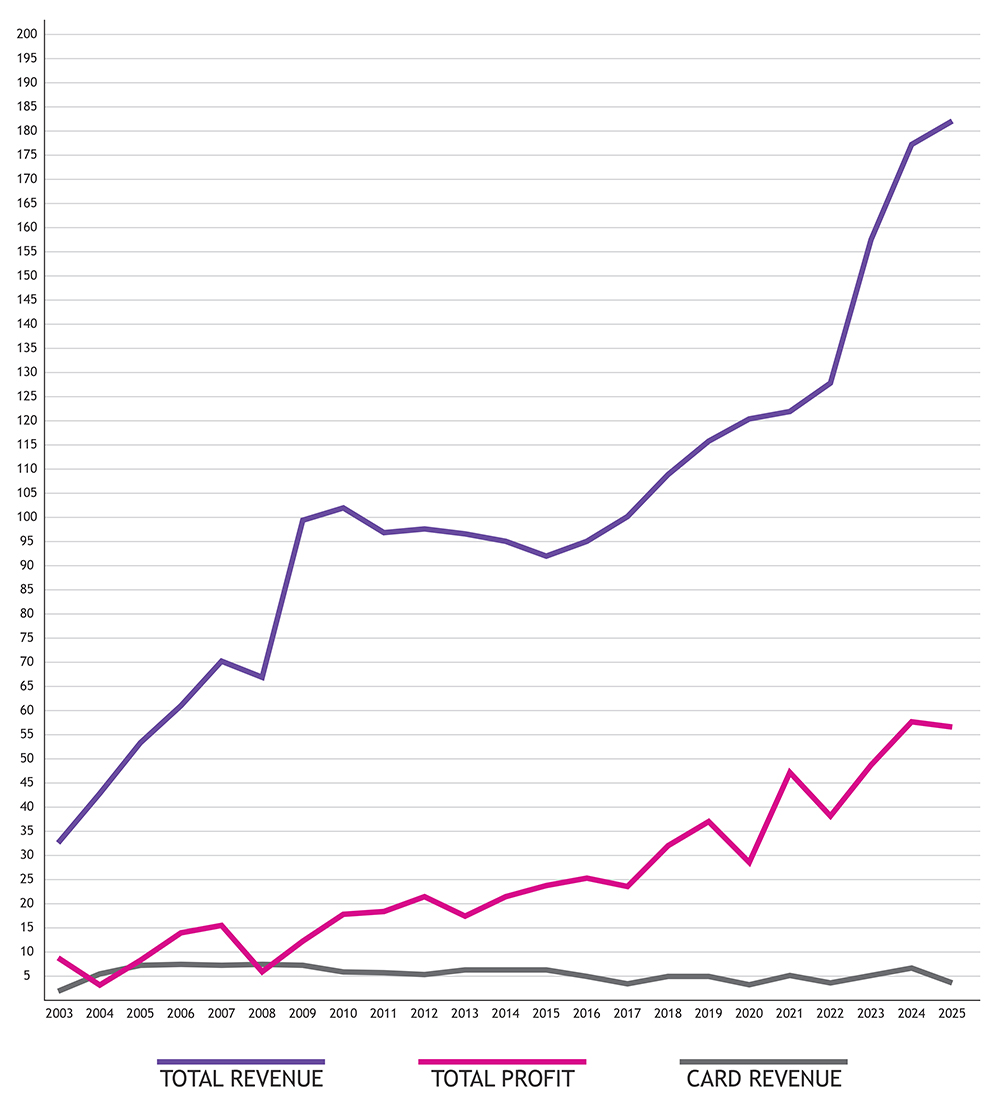
ANNUAL REVENUE AND PROFIT IN BILLIONS OF DOLLARS
But the viral adoption of the card came at a price. By the end of the first year, Chase had paid over $300 million in rewards. So Chase cut the rewards associated with the card in half, and tried to shave $200 million in costs from the managing division. After two more years, the card was still costing the company over $300 million every year. Most forecasts predicted that Chase couldn't expect to break even for nearly six years.
UNITED STATES ANNUAL CREDIT CARD ACCOUNTS (IN BILLIONS) AND BALANCES AND LIMITS (IN BILLIONS OF DOLLARS)
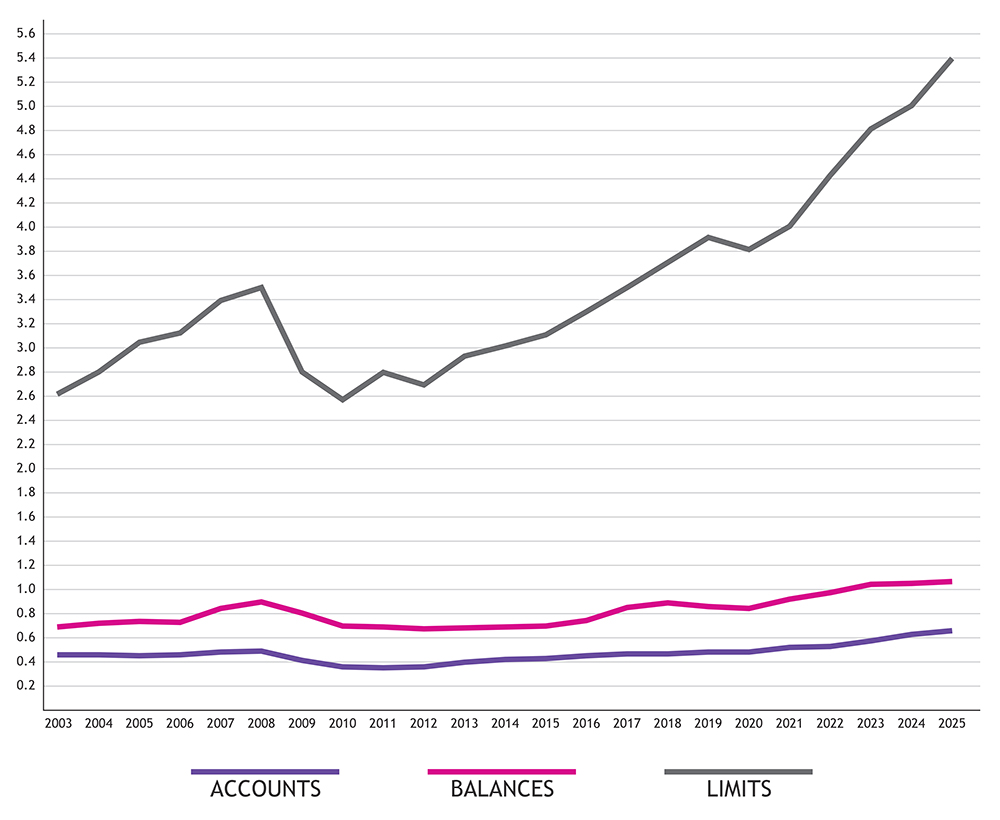
Credit card spending in the United States has become a huge business. Since 2003, the number of credit card accounts in the United States has risen from 453 million to 648 million. In that same timeframe, national credit card balances rose from $700 million to $1.3 billion, and credit card limits climbed from $2.6 billion to $5.4 billion. Since 2012, credit card spending in the United States has increased every year except in 2020.
Meanwhile, JPMorgan Chase has become the most profitable bank in the country. From 2003 to 2025, its revenues have increased from $33 billion to $182 billion, and its profits have grown from $7 billion to $57 billion. In 2016, JPMorgan Chase stopped reporting revenue and profit levels for card services, undoubtedly due to the pending rollout of the Sapphire Reserve card which they knew was going to generate a loss at first. But they consistently reported a business segment figure for card income. Between 2003 and 2008, credit card income grew from $2.4 billion to $7.4 billion. Since that time, its credit card income has fluctuated between $4.5 billion and $6 billion.
Overall, credit card revenue for JPMorgan Chase has fallen 20% since 2015, from $5.9 billion to $4.7 billion. The last reported year is even more telling. Total credit card spending in the United States increased 6% between 2024 and 2025, while JPMorgan Chase's credit card income decreased 14% during the same timeframe, its largest annual decrease in credit card revenue since launching the Sapphire Reserve card. The company will never report the actual numbers of card users for each product line, but this data makes it pretty clear that the company definitely lost customers with the reconfiguration of its most popular rewards card.
But that was likely the plan all along. The company did a brilliant job of capturing a huge percentage of the credit card market, especially among young professionals. And after paying hundreds of millions of dollars in rewards, they've moved to a more conservative and profitable model. They still have more credit cards in circulation than any other bank. They still generate more in revenue than any other bank. And they still net more profit than any other bank in the country. In fact, while reporters spent years pointing out how much money JPMorgan Chase was losing with the Sapphire Reserve card, the company never had an unprofitable year. Since 2016, its profits have increased by 130%, and its revenues have almost doubled.
SOURCES
- "People are Freaking Out over the New $795 Chase Sapphire Reserve Card" from Business Insider
- "Chase Lost Billions on Sapphire Reserve — Here’s the Strategy Behind Its $795 Relaunch" from View from the Wing
- "An Oral History of the World’s First Viral Credit Card" from The New York Times
- "The Sapphire Reserve Card is Great for Consumers - but not JPMorgan" from Business Insider
- "Five Most Profitable Banks in the US in 2024" from Insider Monkey
- "Household Debt and Credit Report" from Federal Reserve Bank of New York
- Revenue data from JPMorgan Chase annual reports
LISTEN
SUBSCRIBE





